Be yourself; Everyone else is already taken.
— Oscar Wilde.
This is the first post on my new blog. I’m just getting this new blog going, so stay tuned for more. Subscribe below to get notified when I post new updates.
Be yourself; Everyone else is already taken.
— Oscar Wilde.
This is the first post on my new blog. I’m just getting this new blog going, so stay tuned for more. Subscribe below to get notified when I post new updates.
5. What course of action would you suggest that the company take? Are there more than one courses of action? If so, what ethical framework is behind your reasoning? Why does this ethical framework yield a better outcome or provide better insights into your solution than another approach? What other approaches might work? Compare and contrast what each approach may offer as a potential solution.
The ethical framework that is being used for Nestle’s situation is the teleological approach. Teleological focuses on results and the outcomes, which Nestle very much only sees the money profit they are making off of the water that they are mining. Nestle is known to source water where communities are struggling. They see this as a positive because they then promote that a benefit of them mining water in that area is that they give jobs to the community. Nestle also funds for new parks, baseball parks, amongst other things for the community. This supports that Nestle believe that the good they are doing for a community over rides the bad.

Deontological does not apply to Nestle because they do not seem to follow rules. Instead they want the rules to be bent for them. Nestle shows this by donating to politicians and having their employees on boards that make the rules and regulations that would affect Nestle and their production along with their profit.
Virtue also does not apply to Nestle because they seem to face the same ethical problems everywhere, yet they do not change their production process of bottled water. Nestle seems to be motivated by money and not what is best for the people. This company has been accused of sourcing water not just from California, who has been going through a drought, but also from third world countries. They make wells so deep and take so much water that the wells around Nestle’s well dry up. This problem along with so many other ethical issues in the pass show that Nestle is not motivated by virtue.
When it comes to bottled water, Nestle needs to re-think their whole approach. It is understandable that Nestle can only get water where there is a source, they cannot make water magically appear. The first step is to search for locations that can afford to have water mined, where the environment will not be heavily impacted. Another step is to have more locations of sourcing water, and a decrease of the amount of water that they are taking.
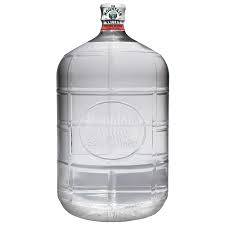
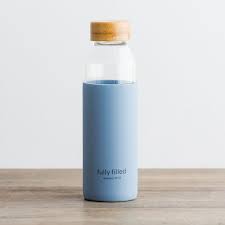
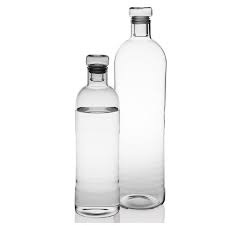
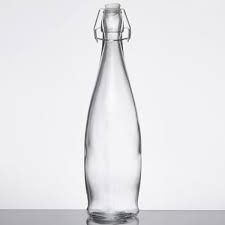
Another way to help improve the environment is to stop producing and using single use plastic bottles. Of the plastic that we recycle, only 8.4% of it actually gets recycled. The rest goes into our landfills and our environment which is also destroying our eco system. The best way to reduce plastic waste is to not produce it at all. I believe that Nestle should sell all of their water through glass bottles. Or they could also sell refillable glass bottles and have a re-fill station in grocery stores, pharmacies, malls, or other local public locations. Personally, I think this is the best way to still be able to give people the option of having bottled water, but making sure that it is more environmentally friendly.

Source:
Plastics: Material-Specific Data. (2019, October 30). Retrieved April 8, 2020, from https://www.epa.gov/facts-and-figures-about-materials-waste-and-recycling/plastics-material-specific-data
4. What are other people (reporters, bloggers, editorialists, perhaps even government officials) saying about this issue? Write a blog that explores what other people are saying about the issue and what you think about their positions and insights or lack of a position or insight. Make sure you cite your sources, and include a minimum of three commentators, from at least two mediums (print, broadcast and/or web).
People’s response to the Nestle water situation has been the same across the board. The people in the communities affected by the company only speak badly of them. It is understandable for them to be frustrated when they pay “much higher rates for tainted water than Nestlé did for clean water” (Perkins, 2019). Another side effect of Nestlé’s bottling production is that they cause a disruption in the eco-system of the streams and that surrounding the streams. Even a former forest service leader, Gary Earney, is one of Nestle’s biggest critic. Even though Earney “administered Nestlé’s water permit between 1984 and 2007”, he believes that Nestles bottle production is hurting the environment (Perkins, 2019). Another problem is that the budget for the Forest Service was severely cut, which led to staff not being able to monitor and manage Nestle and their activities.
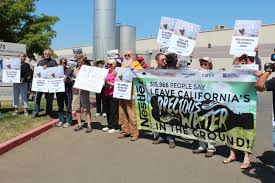
The only people that seem to be saying positive things about Nestle are people that work for the government. They see it as a positive when Nestle funds “new ambulances and fireworks for economically struggling communities… [along with] new baseball diamonds for the district’s baseball team” (Perkins, 2019). And that makes sense when Nestle employees are put on state’s environmental protection board or lead a state’s department of environmental protection or that Nestle or its lobbyists are donating to politicians.
Here is a video by Company Man. He goes over what specifically makes Nestle water in general so controversial.
Here is the link if you have trouble viewing the video: https://www.youtube.com/watch?v=MRWWK-iW_zU&list=RDCMUCQMyhrt92_8XM0KgZH6VnRg&index=1
Here is a video by CBS This Morning. They go more into detail about water bottling production and the public opinion in California.
Here is the link if you have trouble viewing the video: https://www.youtube.com/watch?v=aG62UJIsmd4
Sources:
Nestlé faces backlash over water sourcing from drought-prone California. (2017). Retrieved from https://www.youtube.com/watch?v=aG62UJIsmd4
Nestle Waters – Big and Controversial. (2018). Retrieved from https://www.youtube.com/watch?v=MRWWK-iW_zU&list=RDCMUCQMyhrt92_8XM0KgZH6VnRg&index=1
Perkins, T. (2019, October 29). The fight to stop Nestlé from taking America’s water to sell in plastic bottles. Retrieved March 28, 2020, from https://www.theguardian.com/environment/2019/oct/29/the-fight-over-water-how-nestle-dries-up-us-creeks-to-sell-water-in-plastic-bottles
3. What is the company saying about the ethical situation? How are they explaining their actions, their lack of action, or their reaction? What do you think about their approach to the issue or problem? You might want to examine interviews, press releases and other materials in answering these questions.
When Nestle was asked if they consider moving their water bottling site to another location, outside of California, their response was no. Nestle CEO Tim Brown response was: “Absolutely not. In fact, if I could increase [water bottling operations], I would” (Dangelantonio, 2015). Nestle believes that they are second largest bottler in the state and that if they were to stop production people would just purchase a different brand of bottled water. Brown stated that the water bottling production in California is “driven by consumer demand, it’s driven by an on-the-go society that needs to hydrate. Frankly, we’re very happy [consumers] are doing it in a healthier way” (Dangelantonio, 2015). The healthier ways are meant as in people choosing water over sodas and juices, not the healthier way for the environment. The plastic bottles that are being manufactured and promoted are single use plastic that litter and damage our world and its inhibitors, us included.
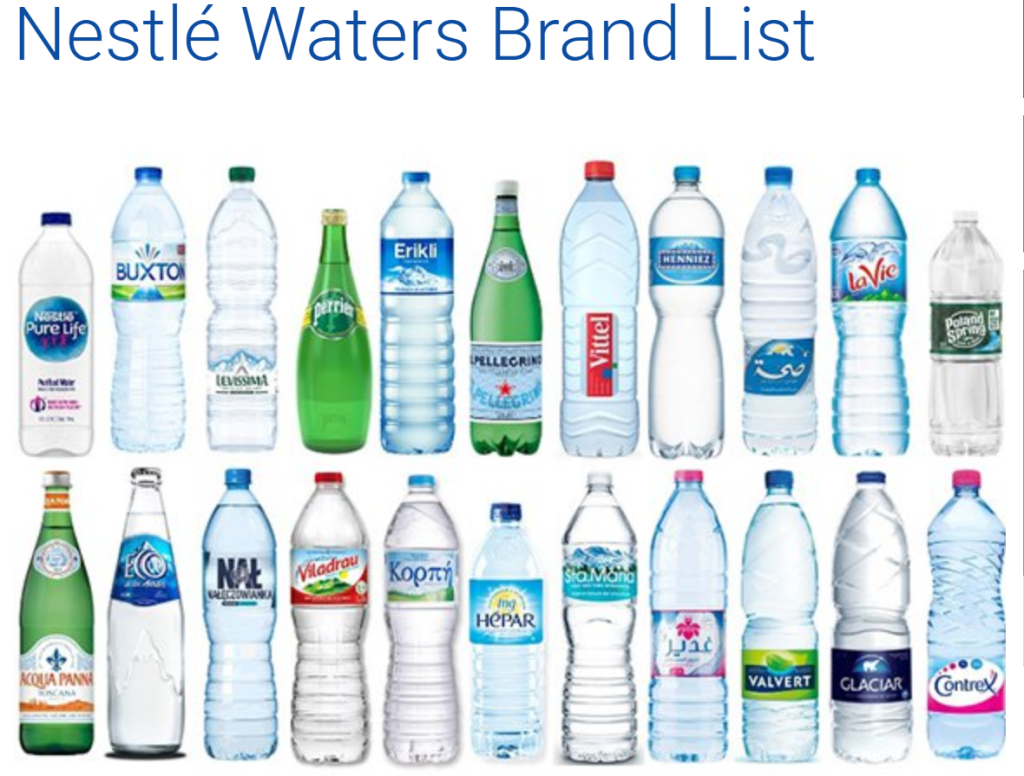
Brown believes water is a right and not a need. In 2000, Nestle pushed the World’s Water Council to make drinking water a need instead of a right. “If water were a right, then it would have to be supplied freely, but since it’s a need, water companies can sell it for as much as they want and make an enormous profit” (O’Callaghan, 2019). According to The Sun, Nestle also believes that bottles water is not the cause nor contributing to the California drought. Nestle tries to justify the amount of water they are taking by stating that they use “a total of 705 million gallons of water per year… [which] is roughly equal to the annual average watering needs of two California golf courses” (The Sun, 2015).
Due to the back lash, Nestle announced that they invested $7 million on technology to upgrade equipment to be eco-friendlier. For example, they are investing in what they call “zero water” to reuse and recycle water that is used to keep milk cool in the milk storage towers. The water used to go into the waste stream, but now with the new technology, the water can be reused for other purposes. Nestle is hoping that this investment changes people’s mind about their water and that the company is being environmentally conscious.
However, overall I find that Nestlé’s approach to bottling water is still ethically wrong. Nestles approach is to find locations that are economically struggling, offer potential jobs and support to the community, and then receive extremely inexpensive permits. Nestle then sells that water for a larger profit and people feel like they are essentially taking the people’s water and selling it even though it should be free and belong to the people, not Nestle. The streams near and around the water source have become smaller and some no longer exist. This then negatively affects the eco system of plants, animals, and us humans.
Source:
Andrei, M. (2020, January 28). Why Nestle is one of the most hated companies in the world. Retrieved March 27, 2020, from https://www.zmescience.com/science/nestle-company-pollution-children/
Dangelantonio, M. (2015, May 13). Nestlé Waters CEO isn’t stopping bottling in California, says new tech will save millions of gallons. Retrieved March 27, 2020, from https://www.scpr.org/programs/airtalk/2015/05/13/42830/nestl-waters-ceo-isnt-stopping-bottling-in-califor/
O’Callaghan, K. (2019, April 24). Nestle: the world’s most corrupt corporation. Retrieved March 27, 2020, from https://skierscribbler.com/7671/opinion/nestle-the-worlds-most-corrupt-corporation/
The Sun (2015, April 28). Nestlé Waters: Bottled water is not contributing to California’s drought. Retrieved March 27, 2020, from https://www.sbsun.com/2015/04/28/nestl-waters-bottled-water-is-not-contributing-to-californias-drought/
2. Give background information about the company and its operations. Please consult the company website and other media sources. Consult the mission and vision statement of the company, as well as their official corporate history. Document your sources with citations at the end of the post.
Background Information:
Nestle has more than 2,000 brands that are presented in 187 countries. Nestle states that their purpose is “enhancing quality of life and contributing to a healthier future. Driven by our purpose we want to help shape a better world and inspire people to live healthier lives. This is how we contribute to society and ensure our long-term success” (History, n.d.). Their goals are split up into three categories, for communities, for families and individuals, and for the planet. Their goal for communities is to help improve 30 million livelihoods in communities directly connected to their business activities. Nestles goal for families and individuals is to help 50 million children live healthier lives. And their goal for the planet is to strive for zero environmental impact in their operations. These three individual goals work together towards one big goal, which is for Nestle to help make a better and healthier world.
Logo History:


Mission statement:
“Nestlé is…
…the world’s leading nutrition, health and wellness company. Our mission of “Good Food, Good Life” is to provide consumers with the best tasting, most nutritious choices in a wide range of food and beverage categories and eating occasions, from morning to night.”
Vision Statement:
“To be a leading, competitive, Nutrition, Health and Wellness Company delivering improved shareholder value by being a preferred corporate citizen, preferred employer, preferred supplier selling preferred products.”
Corporate History:
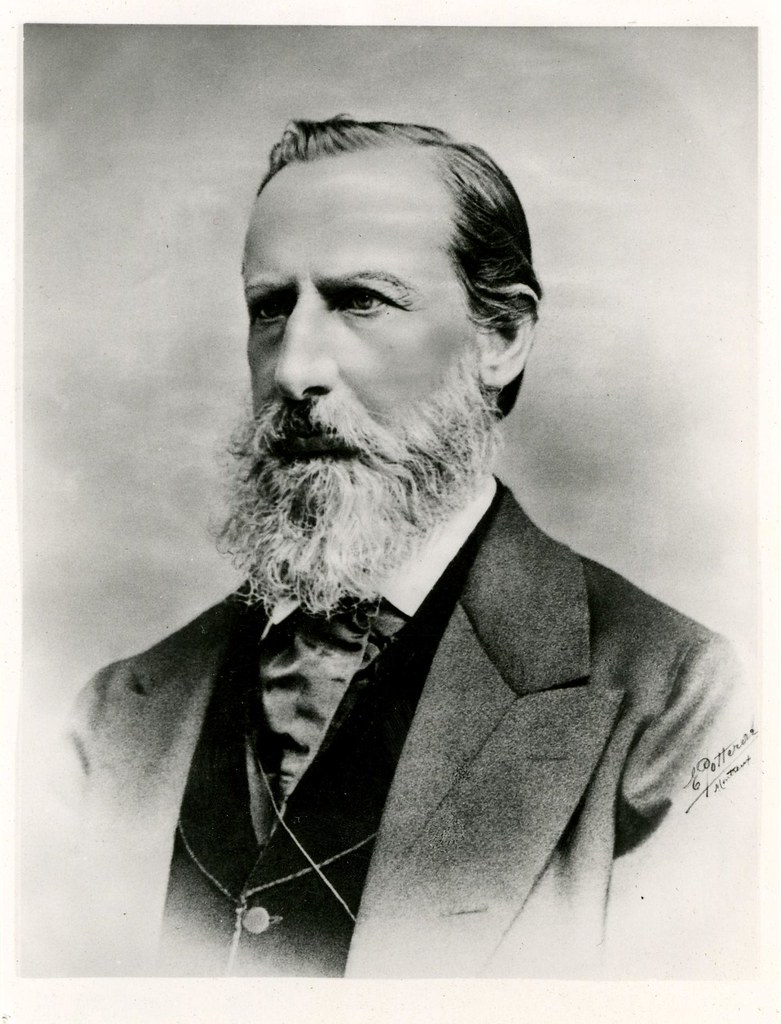
According to the Nestle website, their history began in 1866 when US brothers, Charles and George Page, help establish Anglo-Swiss Condensed Milk Company. The condensed milk was advertised as an alternative to fresh milk. In 1867 “Nestlé’s founder, German-born pharmacist Henri Nestlé, launches his ‘farine lactée’ (‘flour with milk’) in Vevey, Switzerland. It combines cow’s milk, wheat flour and sugar, and Nestlé develops it for consumption by infants who cannot be breastfed, to tackle high mortality rates.” (History, n.d.) Over the years, Anglo-Swiss and Nestle expanded and competed with one another to sell their very similar products. In 1905, the companies finally merge and expand to more products like sterilized milk and unsweetened condensed milk. During World War I, the demand for nestle products had increased yet the production was a challenge due to the boarders. “Condensed milk is long-lasting and easy to transport, which makes it popular with armed forces” (History, n.d.).
Over the years Nestle expands their products and dips their toes into other industries by purchasing and launching companies. From 1929 to 1938, they produced chocolate drinks, variations of chocolate, created a powder extract of coffee, and continued to improve baby formula. Then in 1947 Nestle merged with Swiss company Alimentana, which produces bullions, seasonings, and protein rich dried soups advertised as Maggi soups. In 1957, Nestle launched canned and prepared foods, which became a new growth segment under Maggi soups. Then in 1960, freezers became popular so Nestle becomes involved in the ice cream, frozen yogurt, and frozen food industry. 1969 is the start of Nestlé’s water by buying a stake in the French waters brand Vittel. In 1977, the “declining breast-feeding rates lead some activists to question the baby food marketing strategies of companies including Nestlé. In 1977 they call on people to boycott Nestlé products” (History, n.d.). In 1992, Nestle “develops its position in mineral waters by acquiring France’s Perrier Group. Nestlé Sources Internationales is created as a separate waters business in 1993, and is renamed Nestlé Waters in 2002” (History, n.d.). And then Nestle Pure Life is release in 1998 along with Aquarel in Europe in 2000 right after purchasing an Italian mineral water company, Sanpellegrino Group. Nestle continues to grow through purchasing more companies like Gerber and research facilities for pharmaceuticals and healthy food.
Source:
History. (n.d.). Retrieved March 26, 2020, from https://www.nestle.com/aboutus/history
Luenendonk, M. (2015, September 3). The History of Nestlé. Retrieved March 26, 2020, from https://www.cleverism.com/the-history-of-nestle/
Nestle is known for their large production of food and drinks, specifically infant formula, water, chocolates, coffees, teas, and snacks. Nestle has been in the media multiple times for many different decisions that the company has made that many thinks are ethically questionable. Over the years, Nestle has been accused of taking water to make bottled water from locations that are already low on water supply. Most recently, Nestle has been taking water from California, who is experiencing droughts.

California has put strict rules and regulations in place in order to conserve water, yet Nestle is still bottling large amounts of water. Many believe that the bottled water that Nestle sells is just as good as tap water. It is claimed that “of the 62.6 million gallons of water that Nestle says it extracted from the San Bernardino spring each year on average from 1947 to 2015, the company may only have a right to some 8.5 million gallons” (Chappell, 2017). Another claim is that Nestle lacks the legal permits needed to collect the water from some of its locations in California, like San Bernardino National Forest. Back in 2015, the Desert Sun published a story about Nestlé’s water operations and “Ian James told NPR, “Nestle has 11 spring sources that it uses in California as well as five bottling plants. And the water that’s bottled comes both from springs as well as from other supplies pumped directly from groundwater or from municipal supplies.”” (Chappell, 2017). Many believe that Nestlé’s actions are damaging the natural environment and its surrounding community.

Source:
Chappell, B. (2017). California says nestle lacks permits to extract millions of gallons of water. Washington: NPR. Retrieved from https://ezproxy.rit.edu/login?url=https://search-proquest-com.ezproxy.rit.edu/docview/1980857640?accountid=108
This is an example post, originally published as part of Blogging University. Enroll in one of our ten programs, and start your blog right.
You’re going to publish a post today. Don’t worry about how your blog looks. Don’t worry if you haven’t given it a name yet, or you’re feeling overwhelmed. Just click the “New Post” button, and tell us why you’re here.
Why do this?
The post can be short or long, a personal intro to your life or a bloggy mission statement, a manifesto for the future or a simple outline of your the types of things you hope to publish.
To help you get started, here are a few questions:
You’re not locked into any of this; one of the wonderful things about blogs is how they constantly evolve as we learn, grow, and interact with one another — but it’s good to know where and why you started, and articulating your goals may just give you a few other post ideas.
Can’t think how to get started? Just write the first thing that pops into your head. Anne Lamott, author of a book on writing we love, says that you need to give yourself permission to write a “crappy first draft”. Anne makes a great point — just start writing, and worry about editing it later.
When you’re ready to publish, give your post three to five tags that describe your blog’s focus — writing, photography, fiction, parenting, food, cars, movies, sports, whatever. These tags will help others who care about your topics find you in the Reader. Make sure one of the tags is “zerotohero,” so other new bloggers can find you, too.

 Sidney Ponikau